
Old cut diamonds, and why you should never recut one
The lopsided, chunky, slightly imperfect diamond in your grandmother's ring is worth more than the tidy modern one beside it. Here is why, and how to recognise one.
Somebody brings me a ring they have inherited. The stone is a bit lopsided. The facets are chunky and few. There is a small flat window at the bottom you can see through if you hold it up to the light, and the whole thing looks, to a modern eye, slightly wrong.
Then they tell me a jeweller offered to recut it and make it sparkle properly.
Please do not let anyone do that.
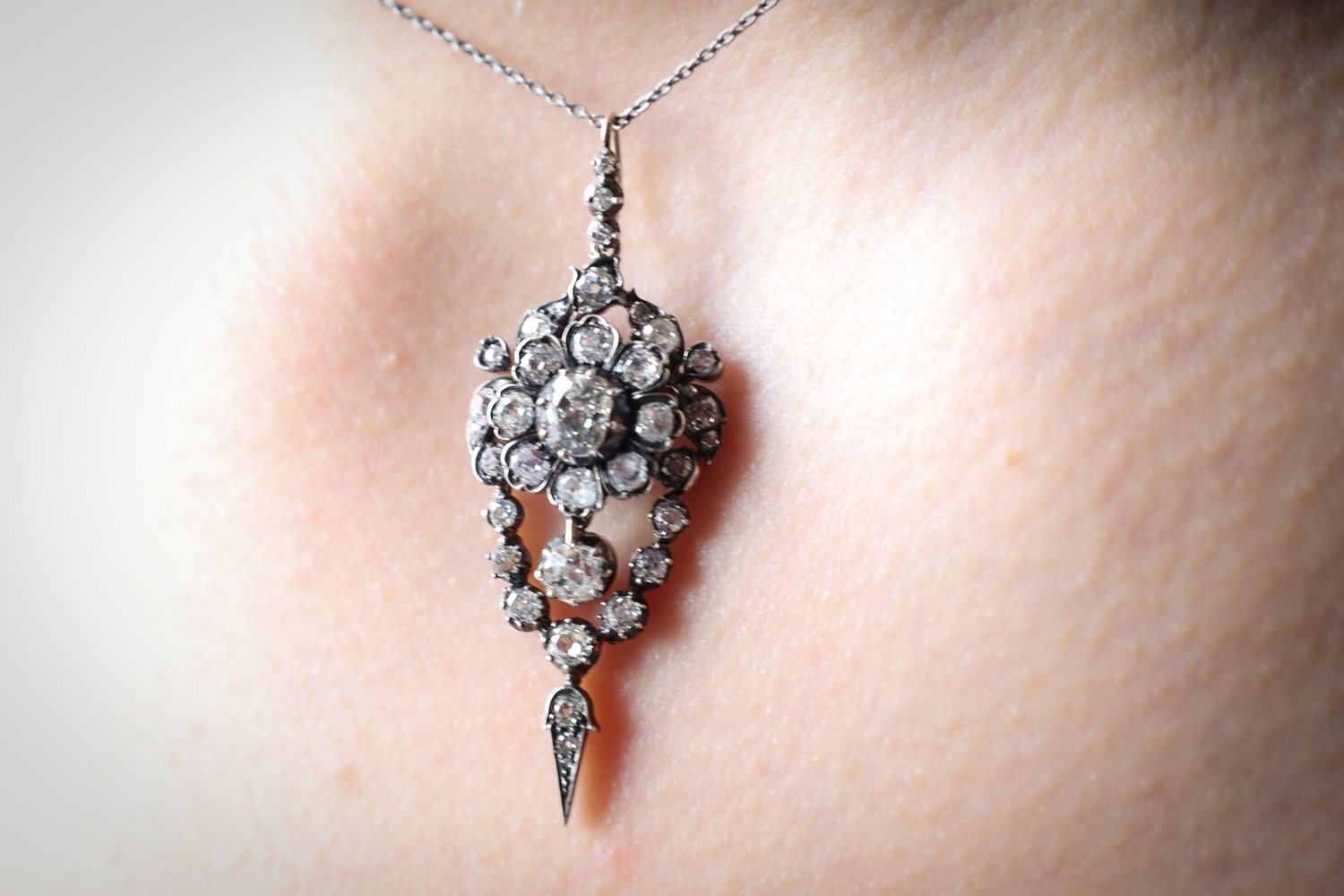
What an old cut is
Before electricity, diamonds were cut by hand. A cutter worked with a wheel, a drop of oil, diamond dust and his own judgement, and the cut he produced was designed for the light people actually lived in, which was candlelight and gaslight.
You will hear several names. Table cuts and point cuts are the earliest and the rarest. Rose cuts are flat underneath with a domed, faceted top, and they glow rather than sparkle. Old mine cuts are cushion shaped with a high crown, a small table and a visible flat facet at the point, called the culet. Old European cuts are the rounder descendant of those, cut into the early twentieth century.
Every one of them was made by a person making decisions, which is why no two are identical.
Why they look different
A modern brilliant is engineered to return as much white light to your eye as possible, as fast as possible. Under a shop's lighting it is spectacular, and that is exactly what it was optimised for.
An old cut does something else. Fewer, larger facets throw big, slow flashes of light and colour rather than a fine glitter. In a dim room, or by candlelight, an old cut comes alive in a way a modern stone does not. It was designed for a world without spotlights.
The modern stone is brighter. The old stone is more interesting. Those are not the same thing, and only one of them can be manufactured to order.
Why the value behaves differently
Here is the part that surprises people, and it matters more now than it did five years ago.
An ordinary modern white diamond is a commodity. There are millions of them, they are made to a specification, and anything made to a specification can be made again, faster and cheaper, by somebody else. That is precisely what has happened to prices over the last few years.
An old cut cannot be made again. The stone in your ring was cut by a man who died a century ago, from rough that came out of a mine that is now closed, for a market that no longer exists. Supply is fixed at whatever survived, and it only ever goes down, because every year some of them get recut, lost or broken up.
So while commercial modern goods have fallen hard, good period stones have held their value, and the best of them have risen.
Why recutting destroys it
Recutting an old stone turns something scarce into something ordinary.
You lose weight, often a good deal of it. You lose the character that made it desirable. And you lose the evidence that it is old, which is frequently the most valuable thing about it. What you get back is a smaller modern diamond, competing in the one part of the market where prices have collapsed.
I have watched people spend money to reduce the value of their own jewellery, in good faith, on advice from someone who genuinely thought they were helping.
What to look for
You do not need equipment to have a reasonable guess.
Hold the stone up and look straight down through the top. If you can see a small flat facet at the bottom, like a tiny window, that is a culet, and modern brilliants do not usually have them. Look at the proportions: old cuts tend to have a tall crown above the girdle and a small table on top. Look for slight asymmetry, facets that are not quite the same size, an outline that is a little bit off round.
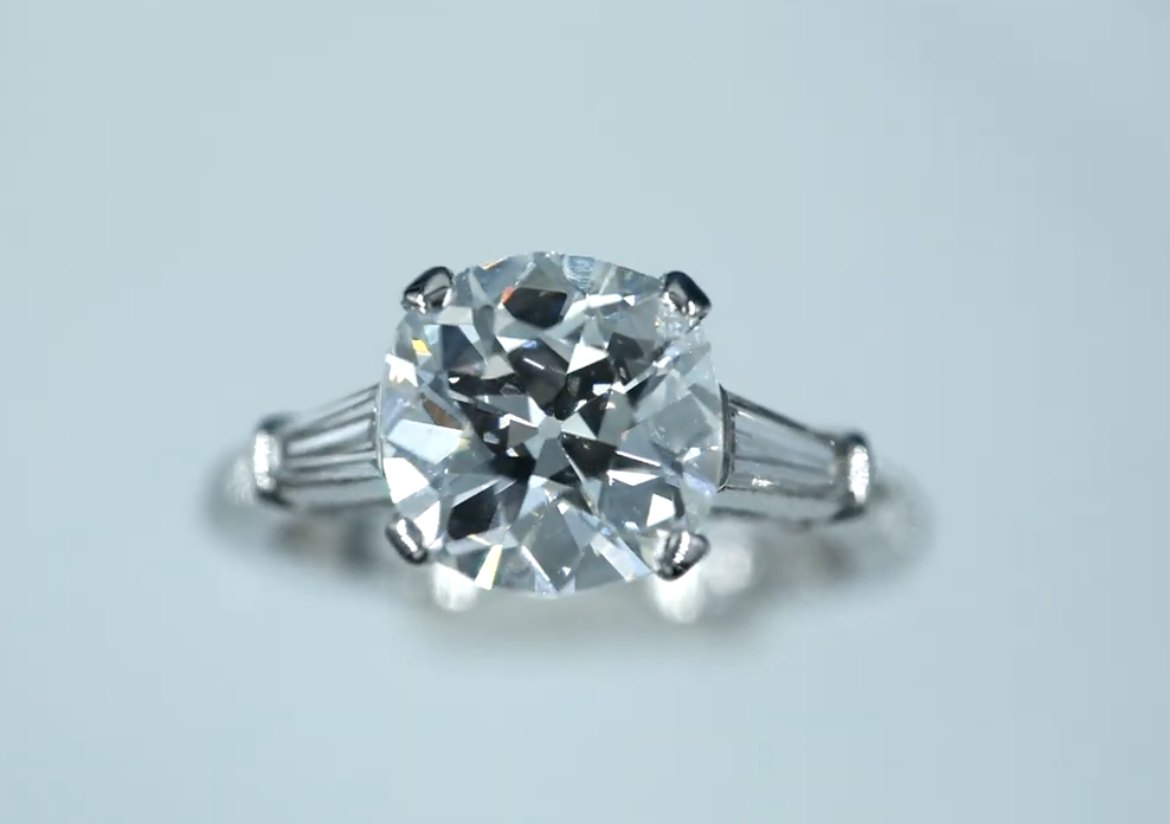
Then look at the setting and the metal. A stone that has sat in the same hand made mount since 1890 tells you a good deal before you ever get a loupe out.
If any of that sounds like what is in your box, it is worth having looked at properly before anybody suggests improving it.
Read next
How to read an Irish hallmark
Colin Weldon · GIA Graduate Gemologist · Dublin